ঔষধের বিস্তারিত বা বিকল্প ঔষধ জানতে ঔষধের নাম দিয়ে সার্চ দিন। যেমন- Napa বা Alatrol বা Amodis
Rupin 10mg
Tablet
Rupatadine Fumarate Ziska Pharmaceuticals Limited
Other Strength:
Alternative:
- RUPASTIN 10mg
- Rupex 10mg
- Rupatrol 10mg
- Rosela 10mg
- Alarup 10mg
- Largix 10mg
- Rupahist 10mg
- Rupaler 10mg
- Rupa 10mg
- Rubest 10mg
- Stark 10mg
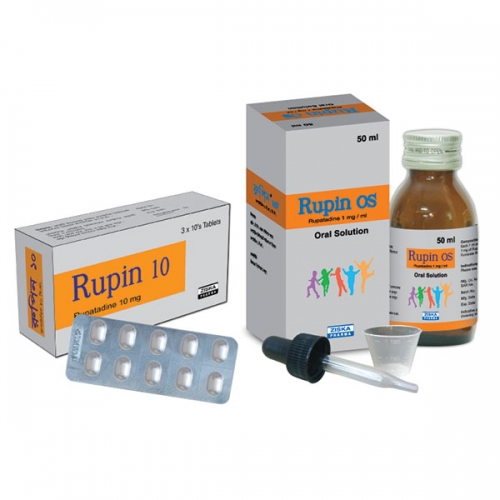 Rupin
Rupin
Presentation
Rupin 10:Each tablet contains 10 mg of Rupatadine as Rupatadine Fumarate INN.
Rupin OS:Each ml oral solution contains 1 mg Rupatadine as Rupatadine Fumarate INN.
Description
It acts as a long-acting, non-sedative antagonist of histaminergic H1-receptors and also antagonizes the platelet-activating factor (PAF). This double mechanism of action gives Rupatadine a special isolated antihistamine action. Both histamine and PAF cause bronchoconstriction and lead to an increase in the vascular permeability, acting as a mediator in the inflammatory process, which is responsible for the bronchial
hyperactivity. Rupatadine has other anti-allergic properties, such as inhibition of
mastocytes, degranulation, induced by the immunological and non-immunological stimuli and inhibition of the release of cytokines, particularly of the tumor necrosis factor alpha
(TNF-alpha) in human mastocytes and monocytes.
Indications
Rupatadine is recommended in the treatment of allergic rhinitis (AR) and chronic idiopathic urticaria. Rupatadine oral solution relieves the symptoms of allergic rhinitis such as sneezing, runny nose, nasal congestion, itching in the eyes and nose in children aged 2 to 11 years.Rupatadine is also used to relieve the symptoms associated with urticaria (an allergic skin rash) such as itching and hives (localised skin redness and swelling) in children aged 2 to 11 years
Dosage & Administration
Paediatric patients age (2 - 11 years): Children weighing more than 25 kg : 5 ml (5 mg of Rupatadine) of oral solution once a day, with or without food. Children weighing more than 10 kg to less than 25 kg: 2.5 ml (2.5 mg of Rupatadine) of oral solution once a day, with or without food.
Adults and adolescents (Over 12 years of age): 10 mg (one tablet) once in a day, with or without food. Elderly: Rupatadine tablet should be used with caution in elderly people. Patients with renal or hepatic insufficiency: As there is no clinical experience in patients with impaired kidney or liver functions, the use of Rupatadine 10 mg tablet is at present not recommended in these patients.
Overdosage
No case of overdose has been reported. In a clinical safety study Rupatadine at daily
dose of 100 mg during 6 days was well tolerated. The most common adverse reaction
was somnolence.
Side Effects
Rupatadine is a non-sedative antihistamine. However, like in other non sedating
second generation antihistamines, the most common side effects are headache and
fatigue, which can be easily be controlled
Contraindications
Hypersensitivity to Rupatadine or to any of the excipients.
Use in Pregnancy & Lactation
Pregnancy: Pregnancy category B 2 . There is no clinical data available on the exposure of Rupatadine during pregnancy. Studies in animals did not show direct or indirect damaging effects, which refer to the pregnancy, embryonic/fetal development & delivery. Pregnant women should therefore use Rupatadine with caution, unless the
potential benefit outweighs the potential risk for the fetus. Lactation:No information is available whether, Rupatadine is excreted in the mother's milk. But many drugs are excreted in human milk. Caution should be exercised when this drug is administered to a nursing mother
Commercial Packaging
Rupin 10 : Each box contains 3 x 10's tablets in blister pack.
Rupin OS : Each box contains a 50 ml bottle of oral solution along with a measuring
cup and a dropper
Drug Interaction
Interaction with ketoconazole or erythromycin:The concomitant administration of Rupatadin 20 mg and ketoconazole or erythromycin increases the systemic exposure to Rupatadine 10 times and 2-3 times respectively. These modifications were not associated with an effect on the QT interval or with an increase of the adverse reactions in comparison with the drugs when administered separately. However, Rupatadine should be used with caution when it is administered concomitantly with these drug substances and other inhibitors of the isoenzyme CYP3A4. Interaction with alcohol: After administration of alcohol, a dose of 10 mg of Rupatadine produced marginal effects in some psychomotor performance tests although they were not significantly different from those induced by intake of alcohol only. Interaction with CNS depressants: As with other antihistamines, interactions with CNS depressants cannot be excluded. Interaction with statins: Increase of asymptomatic 'CPK' have been uncommonly reported in Rupatadine clinical trials. The risk of interaction with statins. Some of which are also metabolised by the cytochrome P450 CYP3A4 isoenzyme is unknown. For these reasons, Rupatadine should be used with caution when it is co-administered with statins
এই পাতাটি ৭২৮ বার দেখা হয়েছে