ঔষধের বিস্তারিত বা বিকল্প ঔষধ জানতে ঔষধের নাম দিয়ে সার্চ দিন। যেমন- Napa বা Alatrol বা Amodis
Telfin 250mg
Tablet
Terbinafine Hydrochloride Unimed Unihealth MFG. Ltd
Other Strength:
Alternative:
- Xfin 250mg
- Skinabin 250mg
- Terbitac 250mg
- Terbifin 250mg
- Terbikill 250mg
- Terbex 250mg
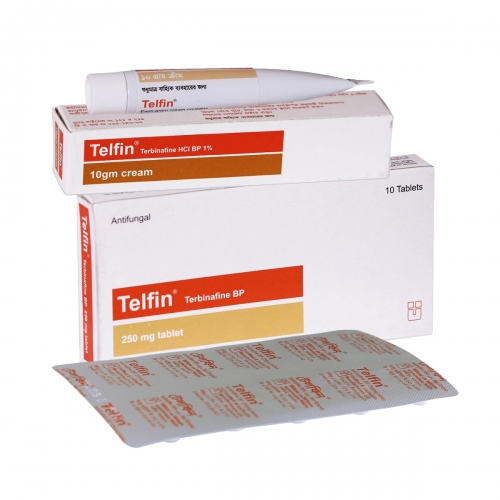 Telfin
Presentation
Telfin tablet: White, oval-shaped, engraved on one side tablet; each tablet contains Terbinafine Hydrochloride BP equivalent to Terbinafine 250 mg.
Telfin cream: White, smooth or almost smooth glossy cream; each gm cream contains Terbinafine Hydrochloride BP 10 mg.
Indications
Telfin tablet: Telfin tablet is indicated for the treatment of onychomycosis of the toenail or fingernail due to dermatophytes (tinea unguium).
Telfin cream: Fungal infection of the skin caused by Trichophyton (e.g. T. rubrum, T. mentagrophytes, T. verrucosum, T. violaceum), Microsporum canis and Epidermophyton floccosum. Yeast infections of the skin, principally those caused by the genus Candida (e.g. C. albicans). Pityriasis (tinea) versicolor due to Pityrosporum orbiculare (also known as Malassezia furfur).
Dosage & Administration
Telfin tablet: For the treatment of finger nail onychomycosis: Terbinafine 250 mg (one Telfin tablet), once daily for 6 weeks.
For the treatment of toenail onychomycosis: Terbinafine 250 mg (one Telfin tablet), once daily for 12 weeks.
The optimal clinical effect is seen some months after mycological cure and cessation of treatment. This is related to the period required for outgrowth of healthy nail.
Telfin cream: Terbinafine cream (Telfin cream) can be applied once or twice daily. Cleanse and dry the affected areas thoroughly before application of the terbinafine cream. Apply the cream to the affected skin and the surrounding area in a thin layer and rub in lightly. In the case of intertriginous infections (submammary, interdigital, intergluteal, inguinal) the application may be covered with a gauze strip, especially at night. The likely durations of treatment are as follows:
Tinea corporis, cruris 1 to 2 weeks
Tinea pedis 1 week
Cutaneous candidiasis 2 weeks
Pityriasis versicolor 2 weeks
Relief of the clinical symptoms usually occurs within a few days. Irregular use or premature discontinuation of treatment carries the risk of recurrence. If there are no signs of improvement after two weeks, the diagnosis should be verified.
Children: The experience with terbinafine in children is still limited and its use cannot therefore be recommended.
Use in elderly: There is no evidence to suggest that elderly patients require different dosages or experience side-effects different to those of younger patients.
Contra-indications, warnings etc.
Contra-indications: Terbinafine tablet and cream are contra-indicated in individuals with hypersensitivity to terbinafine.
Warnings: Terbinafine tablets: Rare cases of liver failure, some leading to death or liver transplant, have occurred with the use of terbinafine tablets for the treatment of onychomycosis in individuals with and without pre-existing liver disease. In the majority of liver cases reported in association with terbinafine use, the patients had serious underlying systemic conditions and an uncertain causal association with terbinafine. The severity of hepatic events and/or their outcome may be worse in patients with active or chronic liver disease. Treatment with terbinafine tablets should be discontinued if there is biochemical or clinical evidence of liver injury. There have been isolated reports of serious skin reactions (e.g., Stevens-Johnson Syndrome and toxic epidermal necrolysis). If progressive skin rash occurs, treatment with terbinafine should be discontinued. Terbinafine cream: Terbinafine cream is for external use only. Contact with the eyes should be avoided.
Precautions: Terbinafine are not recommended for patients with chronic or active liver disease. Before prescribing terbinafine, pre-existing liver disease should be assessed. Hepatotoxicity may occur in patients with and without pre-existing liver disease. Pretreatment serum transaminase (ALT and AST) tests are advised for all patients before taking terbinafine tablets.
Use in pregnancy & lactation: Terbinafine tablet: There are no adequate and well-controlled studies in pregnant women. Because animal reproduction studies are not always predictive of human response, and because treatment of onychomycosis can be postponed until after pregnancy is completed, it is recommended that terbinafine not be initiated during pregnancy. After oral administration, terbinafine is present in breast milk of nursing mothers. Treatment with terbinafine in not recommended in nursing mothers. Terbinafine cream: Foetal toxicity and fertility studies in animals suggest no adverse effects. There is no clinical experience with terbinafine in pregnant women; therefore, unless the potential benefits outweigh any potential risk, terbinafine should not be administered. Terbinafine is excreted in breast milk and therefore mothers should not receive terbinafine treatment whilst breast-feeding.
Pediatric use:
The safety and efficacy of terbinafine have not been established in pediatric patients.
Side effects:
The adverse events reported encompass gastrointestinal symptoms (including diarrhea, dyspepsia and abdominal pain), liver test abnormalities, rashes, urticaria, pruritus, and taste disturbances. In general, the adverse events were mild, transient, and did not lead to discontinuation. Adverse events, based on worldwide experience with terbinafine use, include: idiosyncratic and symptomatic hepatic injury and more rarely, cases of liver failure, some leading to death or liver transplant, serious skin reactions, severe neutropenia, thrombocytopenia, angioedema and allergic reactions (including anaphylaxis). Other adverse reactions that have been reported include malaise, fatigue, vomiting, arthralgia, myalgia, and hair loss.
Drug interactions:
In vivo studies have shown that terbinafine is an inhibitor of the CYP450 2D6 isozyme. Drugs predominantly metabolized by the CYP450 2D6 isozyme include the following drug classes: tricyclic antidepressants, selective serotonin reuptake inhibitors, beta-blockers, antiarrhythmics class 1C (e.g., flecainide and propafenone) and monoamine oxidase inhibitors Type B. Co-administration of terbinafine should be done with careful monitoring and may require a reduction in dose of the 2D6-metabolized drug.
Overdosage:
Clinical experience regarding overdose with terbinafine tablets is limited. Doses up to 5 grams (20 times the therapeutic daily dose) have been taken without inducing serious adverse reactions. The symptoms of overdose included nausea, vomiting, abdominal pain, dizziness, rash, frequent urination, and headache.
Pharmaceutial precautions
Store in a cool and dry place, protected from light.
Packaging quantities
Telfin tablet: Cartons containing 10 tablets in blister.
Telfin cream: Cartons containing 10 gm cream in tube.
এই পাতাটি ৫৫৫ বার দেখা হয়েছে