ঔষধের বিস্তারিত বা বিকল্প ঔষধ জানতে ঔষধের নাম দিয়ে সার্চ দিন। যেমন- Napa বা Alatrol বা Amodis
Orocal Kit 150mg&400mg
Tablet
Ibandronic Acid & Calcium Orotate Ziska Pharmaceuticals Limited
Other Strength:
Alternative:
- O-Cal kit 150mg&400mg
- MaxbonTM Kit 150mg&400mg
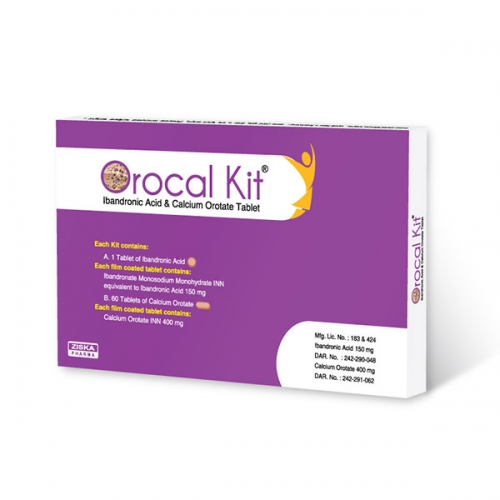 Orocal Kit
Presentation
Orocal Kit® contains 1 tablet of Ibandronic Acid INN 150 mg and 60 tablets of Calcium Orotate INN 400 mg.
Indications
Orocal Kit ® is indicated for the treatment and prevention of osteoporosis in women after menopause. It increases bone mineral density (BMD) and reduces the incidence of vertebral fractures.
Dosage & Administration
One tablet of Ibandronic Acid 150 mg once monthly on the same date of each month is recommended. To maximize clinical benefit of Ibandronic acid, two tablets of Calcium Orotate 400 mg per day are usually recommended in divided dosage or as directed by physician.
Dosing Instructions
To maximize absorption and clinical benefit, Ibandronic Acid tablet of Orocal Kit® should be taken at least 60 minutes before the first food or drink (other than water) of the day or before taking any oral medication or supplementation, including calcium, antacids, or vitamins.
To facilitate delivery to the stomach and thus reduce the potential for esophageal irritation, Ibandronic Acid tablet should be swallowed whole with a full glass of plain water (250 ml) while the patient is standing or sitting in an upright position.
Patients should not lie down for 60 minutes after taking Ibandronic Acid tablet.
Patients should not eat, drink anything except water, or take other medications for at least 60 minutes after taking Ibandronic Acid tablet.
Plain water is the only drink that should be taken with Ibandronic Acid tablet. Note that some mineral waters may have a higher concentration of calcium and therefore should not be used.
Patients should not chew, crush or let the tablet dissolve in mouths . because of a potential for oropharyngeal ulceration.
Ibandronic Acid 150 mg tablet of Orocal Kit® should be taken on the same date of each month (i.e., the patient's Ibandronic Acid day).
The patient must not take two Ibandronic Acid 150 mg tablets within the same week.
If the once-monthly dose is missed and the patient's next scheduled Ibandronic acid day is more than 7 days away, the patient should be instructed to take one Ibandronic Acid 150 mg tablet in the morning following the date that it is remembered. The patient should then return to taking one Ibandronic Acid 150 mg tablet every month in the morning of their chosen day, according to their original schedule.
If the once-monthly dose is missed and the patient's next scheduled Ibandronic Acid day is only 1 to 7 days away, the patient must wait until the subsequent month's scheduled Ibandronic Acid day to take their tablet. The patient should then return to taking one Ibandronic Acid 150 mg tablet every month in the morning of their chosen day, according to their original schedule.
Start taking Calcium Orotate tablets from the next day of Ibandronic Acid Day (from 'Day 2' and onwards). Recommendations for Calcium Supplementation: Patients should receive supplemental calcium (already provided as Calcium Orotate 400 mg tablet) if dietary intake is inadequate.
Side Effects
Ibandronic Acid: Common side effects include Hypertension, Dyspepsia, Nausea, Diarrhea, Abdominal Pain, Arthralgia, Back Pain, Localized Osteoarthritis, Myalgia, Muscle Cramp, Influenza, Nasopharyngitis, Bronchitis, Urinary Tract Infection, Upper Respiratory Tract Infection, Headache, Dizziness, Skin rash, Insomnia etc. Calcium Orotate: Bloating and swelling in the abdomen are common side effects of Calcium Orotate. Loss of appetite, upset stomach, constipation, nausea, vomiting, unusual weight loss, mood changes, bone/muscle pain, headache, increased thirst/urination, weakness, unusual tiredness, formation of kidney stones may occur infrequently.
Precautions
Ibandronic Acid: Upper Gastrointestinal Adverse Reactions: Ibandronic acid may cause local irritation of the upper gastrointestinal mucosa. Because of these possible irritant effects and a potential for worsening of the underlying disease, caution should be used when Ibandronic acid is given to patients with active upper gastrointestinal problems (such as known Barrett's esophagus, dysphagia, other esophageal diseases, gastritis, duodenitis or ulcers). The risk of severe esophageal adverse experiences appears to be greater in patients who lie down after taking oral bisphosphonates and/or who fail to swallow it with the recommended full glass (250 ml) of water, and/or who continue to take oral bisphosphonates after developing symptoms suggestive of esophageal irritation. Hypocalcemia and Mineral Metabolism: Adequate intake of Calcium is important in all patients to prevent hypocalcemia. Musculoskeletal pain: Severe and occasionally incapacitating bone, joint, and/or muscle pain has been reported in patients taking Ibandronic Acid. Consider discontinuing use if severe symptoms develop. Severe Renal Impairment: Ibandronic acid is not recommended for use in patients with severe renal impairment (creatinine clearance of <30 ml/min). Calcium Orotate: Before taking Calcium Orotate, precaution is needed if the patient has any allergies. This product may contain inactive ingredients, which can cause allergic reactions or other problems. Precaution is needed before using this product in kidney disease, kidney stones, little or no stomach acid (achlorhydria), heart disease, disease of the pancreas, sarcoidosis (a certain lung disease), difficulty absorbing nutrition from food (malabsorption syndrome).
Contraindications
Ibandronic Acid is contraindicated in conditions like:
Abnormalities of the esophagus which delay esophageal emptying such as stricture or achalasia.
Inability to stand or sit upright for at least 60 minutes.
Hypocalcemia.
Known hypersensitivity to Ibandronic Acid. Calcium Orotate is contraindicated in conditions like:
Incomplete or infrequent bowel movements.
Kidney stone, kidney disease.
Sarcoidosis.
Increased activity of the parathyroid gland.
Extreme loss of body water.
Use in Pregnancy & Lactation
Pregnancy: There are no adequate and well-controlled studies in pregnant women for Ibandronic Acid and Calcium Orotate combination: The combination should be used during pregnancy only if the potential benefit justifies the potential risk to the mother and fetus. Pregnancy Category of Ibandronic Acid: C.
Nursing Mothers
It is not known whether Ibandronic Acid and Calcium Orotate combination is excreted in human milk. Caution should be exercised when Ibandronic Acid and Calcium Orotate combination is administered to a nursing woman.
Commercial Packaging
Orocal Kit ® Each box contains one Kit. Each Kit contains 1 film coated tablet of Ibandronate Monosodium Monohydrate INN equivalent to Ibandronic Acid 150 mg and 60 film coated tablets of Calcium Orotate INN 400 mg in one calendar strip.
Drug Interaction
Ibandronic Acid: Calcium Supplements/Antacids: Products containing calcium and other multivalent cations (such as aluminum, magnesium, iron) are likely to interfere with absorption of Ibandronic Acid. Ibandronic Acid should be taken at least 60 minutes before any oral medications, including medications containing multivalent cations (such as antacids, supplements or vitamins). Also, patients should wait at least 60 minutes after dosing before taking any other oral medications. Aspirin/Nonsteroidal Anti-Inflammatory Drugs (NSAIDs): Because aspirin, NSAIDs and bisphosphonates are all associated with gastrointestinal irritation, caution should be exercised in the concomitant use of aspirin or NSAIDs with Ibandronic Acid. H2 Blockers: In healthy volunteers, co-administration with Ranitidine resulted in a 20% increased bioavailability of Ibandronic Acid, which was not considered to be clinically relevant. Calcium Orotate: Calcium can decrease absorption of the following drugs when taken together: Bisphosphonates (e.g., alendronate), Quinolone antibiotics (e.g., ciprofloxacin, levofloxacin) and Tetracycline antibiotics (e.g., doxycycline, minocycline), levothyroxine, phenytoin (an anticonvulsant) and Tiludronate disodium (to treat Paget's disease). Thiazide-type diuretics can interact with Calcium supplements, increasing the risks of hypercalcemia and hypercalciuria. Both Aluminum and Magnesium containing antacids increase urinary Calcium excretion. Mineral oil and stimulant laxatives decrease Calcium absorption. Glucocorticoids can cause Calcium depletion and eventually osteoporosis when they are used for months. Oral contraceptives as well as estrogen compounds reduce Calcium. Anti-inflammatories such as NSAIDs, Aspirin, Ibuprofen deplete Calcium. Corticosteroids deplete Calcium
Pediatric use
Safety and effectiveness in pediatric patients (<18 years) have not been established.
Storage
Keep in a cool and dry place. Protect from light. Keep out of the reach of children.
এই পাতাটি ৩৯০ বার দেখা হয়েছে