ঔষধের বিস্তারিত বা বিকল্প ঔষধ জানতে ঔষধের নাম দিয়ে সার্চ দিন। যেমন- Napa বা Alatrol বা Amodis
HCQ 200mg
Tablet
Hydroxychloroquine Sulphate Unimed Unihealth MFG. Ltd
Other Strength:
Alternative:
- Reconil 200mg
- Quinivir 200mg
- Kovicin 200mg
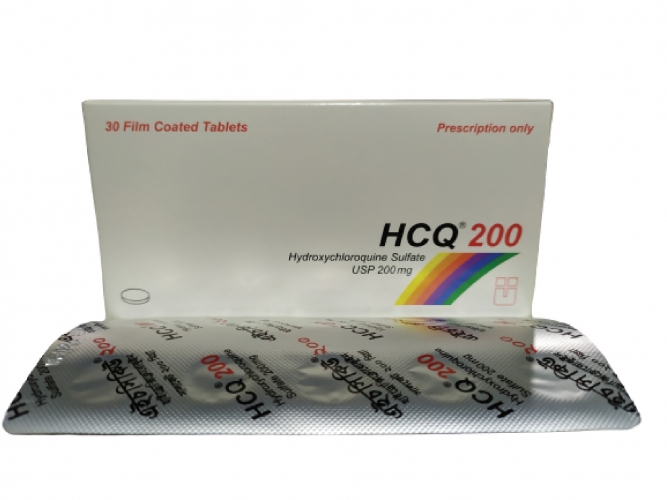 HCQ
HCQ
Presentation
HCQ 200 tablet: White, round shaped, film coated tablet; each tablet contains Hydroxychloroquine Sulfate USP 200 mg .
Indications
Adults
Treatment of rheumatoid arthritis, discoid and systemic lupus erythematosus, and dermatological conditions caused or aggravated by sunlight.
Paediatric population
Treatment of juvenile idiopathic arthritis (in combination with other therapies), discoid and systemic lupus erythematosus.
Dose and Administration
Posology
Adults (including the elderly)
The minimum effective dose should be employed. This dose should not exceed 6.5 mg/kg/day (calculated from ideal body weight and not actual body weight) and will be either 200 mg or 400 mg per day.
In patients able to receive 400 mg daily:
Initially 400 mg daily in divided doses. The dose can be reduced to 200 mg when no further improvement is evident. The maintenance dose should be increased to 400 mg daily if the response lessen
Paediatric population
The minimum effective dose should be employed and should not exceed 6.5 mg/kg/day based on ideal body weight. The 200 mg tablet is therefore not suitable for use in children with an ideal body weight of less than 31 kg.
Method of administration
The tablets are for oral administration.
Each dose should be taken with a meal or glass of milk.
Hydroxychloroquine is cumulative in action and will require several weeks to exert its beneficial effects, whereas minor side effects may occur relatively early. For rheumatic disease treatment should be discontinued if there is no improvement by 6 months. In light-sensitive diseases, treatment should only be given during periods of maximum exposure to light.
Contraindications
Known hypersensitivity to 4-aminoquinoline compounds or to any of the excipients.
Pre-existing maculopathy of the eye.
Special warnings and precautions for use
Retinopathy
The occurrence of retinopathy is very uncommon if the recommended daily dose is not exceeded. The administration of doses in excess of the recommended maximum is likely to increase the risk of retinopathy, and accelerate its onset.
All patients should have an ophthalmological examination before initiating treatment with hydroxychloroquine sulfate. Thereafter, ophthalmological examinations must be repeated at least every 12 months.
The examination should include testing visual acuity, careful ophthalmoscopy, fundoscopy, central visual field testing with a red target, and colour vision.
This examination should be more frequent and adapted to the patient in the following situations:
– daily dosage exceeds 6.5 mg/kg lean body weight. Absolute body weight used as a guide to dosage could result in an overdose in the obese.
– renal insufficiency.
– visual acuity below 6/8.
– age above 65 years.
– cumulative dose more than 200 g.
Hydroxychloroquine sulfate should be discontinued immediately in any patient who develops a pigmentary abnormality, visual field defect, or any other abnormality not explainable by difficulty in accommodation or presence of corneal opacities. Patients should continue to be observed for possible progression of the changes.
Patients should be advised to stop taking the drug immediately and seek the advice of their prescribing doctor if any disturbances of vision are noted, including abnormal colour vision.
Extrapyramidal disorders
Extrapyramidal disorders may occur with hydroxychloroquine sulfate
Hypoglycaemia
Hydroxychloroquine has been shown to cause severe hypoglycaemia including loss of consciousness that could be life threatening in patients treated with and without antidiabetic medications. Patients treated with hydroxychloroquine should be warned about the risk of hypoglycaemia and the associated clinical signs and symptoms. Patients presenting with clinical symptoms suggestive of hypoglycaemia during treatment with hydroxychloroquine should have their blood glucose level checked and treatment reviewed as necessary.
Chronic cardiac toxicity
Cases of cardiomyopathy resulting in cardiac failure, in some cases with fatal outcome, have been reported in patients treated with hydroxychloroquine sulfate. Clinical monitoring for signs and symptoms of cardiomyopathy is advised and hydroxychloroquine sulfate should be discontinued if cardiomyopathy develops. Chronic toxicity should be considered when conduction disorders (bundle branch block/atrio-ventricular heart block) as well as biventricular hypertrophy are diagnosed.
Bone marrow depression
Although the risk of bone marrow depression is low, periodic blood counts are advisable as anaemia, aplastic anaemia, agranulocytosis, a decrease in white blood cells, and thrombocytopenia have been reported. Hydroxychloroquine sulfate should be discontinued if abnormalities develop.
Other monitoring on long-term treatments
Patients on long-term therapy should have periodic full blood counts, and hydroxychloroquine should be discontinued if abnormalities develop.
All patients on long-term therapy should undergo periodic examination of skeletal muscle function and tendon reflexes. If weakness occurs, the drug should be withdrawn.
Potential carcinogenic risk
Experimental data showed a potential risk of inducing gene mutations. Animal carcinogenicity data is only available for one species for the parent drug chloroquine and this study was negative. In humans, there are insufficient data to rule out an increased risk of cancer in patients receiving long-term treatment.
Hydroxychloroquine sulfate should be used with caution in patients taking medicines which may cause adverse skin reactions.
Caution should also be applied when it is used in the following:
patients with a sensitivity to quinine, those with glucose-6-phosphate dehydrogenase deficiency, those with porphyria cutanea tarda which can be exacerbated by hydroxychloroquine and in patients with psoriasis since it appears to increase the risk of skin reactions.
patients with hepatic or renal disease, and in those taking drugs known to affect those organs. Estimation of plasma hydroxychloroquine levels should be undertaken in patients with severely compromised renal or hepatic function and dosage adjusted accordingly.
patients with severe gastrointestinal, neurological or blood disorders.
Lactose intolerance
Patients with rare hereditary problems of galactose intolerance, the Lapp lactase deficiency or glucose-galactose malabsorption should not take this medicine.
Paediatric population
Small children are particularly sensitive to the toxic effects of 4-aminoquinolines; therefore patients should be warned to keep hydroxychloroquine sulfate out of the reach of children.
Interaction with other medicinal products and other forms of interaction
Hydroxychloroquine sulfate has been reported to increase plasma digoxin levels. Serum digoxin levels should be closely monitored in patients receiving concomitant treatment.
Hydroxychloroquine sulfate may also be subject to several of the known interactions of chloroquine even though specific reports have not appeared. These include: potentiation of its direct blocking action at the neuromuscular junction by aminoglycoside antibiotics; inhibition of its metabolism by cimetidine which may increase plasma concentration of the antimalarial; antagonism of effect of neostigmine and pyridostigmine; reduction of the antibody response to primary immunisation with intradermal human diploid-cell rabies vaccine.
As with chloroquine, antacids may reduce absorption of hydroxychloroquine so it is advised that a 4 hour interval be observed between Plaquenil and antacid dosaging.
As hydroxychloroquine may enhance the effects of a hypoglycaemic treatment, a decrease in doses of insulin or anti-diabetic drugs may be required.
Halofantrine prolongs the QT interval and should not be administered with other drugs that have the potential to induce cardiac arrhythmias, including hydroxychloroquine. Also, there may be an increased risk of inducing ventricular arrhythmias if hydroxychloroquine is used concomitantly with other arrhythmogenic drugs, such as amiodarone and moxifloxacin.
An increased plasma ciclosporin level was reported when ciclosporin and hydroxychloroquine were co-administered.
Hydroxychloroquine can lower the convulsive threshold. Co-administration of hydroxychloroquine with other anti-malarials known to lower the convulsion threshold (e.g mefloquine) may increase the risk of convulsions. Also, the activity of anti-epileptic drugs might be impaired if co-administered with hydroxychloroquine.
In a single-dose interaction study, chloroquine has been reported to reduce the bioavailability of praziquantel. It is not known if there is a similar effect when hydroxychloroquine and praziquantel are co-administered. Per extrapolation, due to the similarities in structure and pharmacokinetic parameters between hydroxychloroquine and chloroquine, a similar effect may be expected for hydroxychloroquine.
There is a theoretical risk of inhibition of intra-cellular α-galactosidase activity when hydroxychloroquine is co-administered with agalsidase.
Fertility, pregnancy and lactation
Pregnancy
A moderate amount of data on pregnant women (between 300 – 1000 pregnancy outcomes), including prospective studies in long-term use with large exposure, have not observed a significant increased risk of congenital malformations or poor pregnancy outcomes.
Hydroxychloroquine crosses the placenta.
Only limited non-clinical data are available for hydroxychloroquine, data on chloroquine have shown developmental toxicity at high supratherapeutic doses and a potential risk of genotoxicity in some test systems.
Therefore hydroxychloroquine sulfate should be avoided in pregnancy except when, in the judgement of the physician, the individual potential benefits outweigh the potential hazards.
Breast-feeding
Careful consideration should be given to using hydroxychloroquine during lactation, since it has been shown to be excreted in small amounts in human breast milk, and it is known that infants are extremely sensitive to the toxic effects of 4-aminoquinolines.
Fertility
Animal studies showed an impairment of male fertility for chloroquine. There are no data in humans.
Effects on ability to drive and use machines
Impaired visual accommodation soon after the start of treatment has been reported and patients should be warned regarding driving or operating machinery. If the condition is not self-limiting, it will resolve on reducing the dose or stopping treatment.
Side-effects
The following CIOMS frequency rating is used, when applicable:
Very common ≥ 10 %; Common ≥ 1 and <10 %; Uncommon ≥ 0.1 and < 1 %; Rare ≥ 0.01 and < 0.1 %; Very rare < 0.01 %; Not known (frequency cannot be estimated from available data).
Blood and lymphatic system disorders
Not known: bone-marrow depression, anaemia, aplastic anaemia, agranulocytosis, leucopenia and thrombocytopenia
Immune system disorders
Not known: urticaria, angioedema, bronchospasm
Metabolism and nutrition disorders
Common: anorexia
Not known: hypoglycemia
Hydroxychloroquine may precipitate or exacerbate porphyria.
Psychiatric disorders
Common: affect lability
Uncommon: nervousness
Not known: psychosis
Nervous system disorders
Common: headache
Uncommon: dizziness
Not known:
convulsions have been reported with this class of drugs.
extrapyramidal disorders such as dystonia, dyskinesia, tremor.
Eye disorders
Common: blurring of vision due to a disturbance of accommodation which is dose dependent and reversible
Uncommon: retinopathy with changes in pigmentation and visual field defects can occur, but appears to be uncommon if the recommended daily dose is not exceeded. In its early form it appears reversible on discontinuation of hydroxychloroquine sulfate. If allowed to develop, there may be a risk of progression even after treatment withdrawal.
Patients with retinal changes may be asymptomatic initially, or may have scotomatous vision with paracentral, peri-central ring types, temporal scotomas and abnormal colour vision.
Corneal changes including oedema and opacities have been reported. They are either symptomless or may cause disturbances such as haloes, blurring of vision or photophobia. They may be transient and are reversible on stopping treatment.
Not known: cases of maculopathies and macular degeneration have been reported (the onset ranging from 3 months to several years of exposure to hydroxychloroquine) and may be irreversible.
Ear and labyrinth disorders
Uncommon: vertigo, tinnitus
Not known: hearing loss
Cardiac disorders
Not known: cardiomyopathy which may result in cardiac failure and in some cases a fatal outcome.
Chronic toxicity should be considered when conduction disorders (bundle branch block/atrioventricular heart block) as well as biventricular hypertrophy are found. Drug withdrawal may lead to recovery.
Gastrointestinal disorders
Very common: abdominal pain, nausea
Common: diarrhoea, vomiting
These symptoms usually resolve immediately on reducing the dose or on stopping treatment.
Hepatobiliary disorders
Uncommon: abnormal liver function tests
Not known: fulminant hepatic failure
Skin and subcutaneous tissue disorders
Common: skin rash, pruritus
Uncommon: pigmentation disorders in skin and mucous membranes, bleaching of hair, alopecia
These usually resolve readily on stopping treatment.
Not known:
bullous eruptions including erythema multiforme
Stevens-Johnson syndrome and toxic epidermal necrolysis
drug rash with eosinophilia and systemic symptoms (DRESS syndrome)
photosensitivity
exfoliative dermatitis, acute generalised exanthematous pustulosis (AGEP).
AGEP has to be distinguished from psoriasis, although hydroxychloroquine may precipitate attacks of psoriasis. It may be associated with fever and hyperleukocytosis. Outcome is usually favourable after drug withdrawal.
Musculoskeletal and connective tissue disorders
Uncommon: sensory motor disorders
Not known:
skeletal muscle myopathy or neuromyopathy leading to progressive weakness and atrophy of proximal muscle groups. Myopathy may be reversible after drug discontinuation, but recovery may take many months.
depression of tendon reflexes and abnormal nerve conduction studies.
Metabolism and nutrition disorders
Not known: hypoglycaemia.
Overdose
Overdose with the 4-aminoquinolines is dangerous particularly in infants, as little as 1 – 2 g having proved fatal.
The symptoms of overdose may include headache, visual disturbances, cardiovascular collapse, convulsions, and hypokalaemia. Rhythm and conduction disorders, including QT prolongation, Torsade de Pointes, ventricular tachycardia and ventricular fibrillation, followed by sudden potentially fatal respiratory and cardiac arrest. Immediate medical attention is required, as these effects may appear shortly after the overdose.
The stomach should be immediately evacuated, either by emesis or by gastric lavage. Activated charcoal in a dose at least five times of the overdose may inhibit further absorption if introduced into the stomach by tube following lavage and within 30 minutes of ingestion of the overdose.
Consideration should be given to administration of parenteral diazepam in cases of overdose; it has been shown to be beneficial in reversing chloroquine cardiotoxicity.
Respiratory support and shock management should be instituted as necessary.
Pharmaceutical precautions
Store in a cool & dry place below 30°C, protect from light.
Packaging quantities
HCQ 200 tablet: Each box contains 30 film coated tablets in Alu-PVC blister pack.
এই পাতাটি ৩৯৩ বার দেখা হয়েছে