ঔষধের বিস্তারিত বা বিকল্প ঔষধ জানতে ঔষধের নাম দিয়ে সার্চ দিন। যেমন- Napa বা Alatrol বা Amodis
Etoben 120mg
TabletEtoricoxib
BENHAM pharmaceuticals
Other Strength:
- Etoben 90mg
Alternative:
- Tory 120mg
- Cox-E 120mg
- Vericox 120mg
- Riox 120mg
- Ecox 120mg
- Coxetori 120mg
- Etovan 120mg
- Aroxia 120mg
- Setorib 120mg
- Ribox 120mg
- Recox 120mg
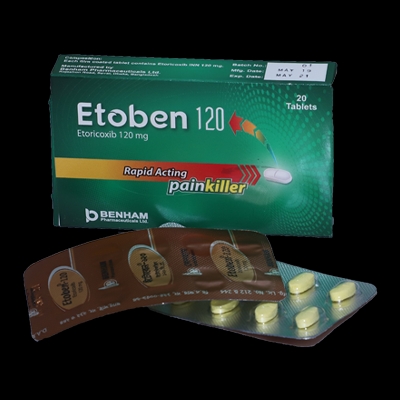
Etoben
Presentation:
Etoben 60 tablet: Each tablet contains Etoricoxib INN 60 mg.
Etoben 90 tablet: Each tablet contains Etoricoxib INN 90 mg.
Etoben 120 tablet: Each tablet contains Etoricoxib INN 120 mg.
Descriptions:
Etoben is the preparation of Etoricoxib. It is a nonsteroidal anti-inflammatory drug (NSAID) that exhibits anti-inflammatory, analgesic, and antpyretic activities in animal models. It is a potent, orally active, highly selective cyclooxygenase-2 (COX-2) inhibitor within and above the clinical dose range. COX-2 has been shown to be primarily responsible for the synthesis of prostanoid mediators of pain, inflammation, and fever. Selective inhibition of COX-2 by Etoricoxib decreases these clinical signs and symptoms with decreased Gl toxicity and without effects on platelet function.
Indication:
Pain and inflammation in osteoarthritis, rheumatoid arthritis and other chronic musculoskeletal disorders.
● Acute gout
● Pain of dysmenorrhoea and
● Pain following dental surgery.
Dosage & Administration:
Adult and adolescent over 16 years:
In case of osteoarthritis, dysmenorrhoea, chronic musculoskeletal disorders, 60 mg once daily. In case of rheumatoid arthritis 90 mg once daily. In case of pain following dental surgery, acute gout 120 mg once daily. Safety and effectiveness of Etoricoxib in paediatric patients have not been established.
Contraindications:
It is contra-indicated in patients with hypersensitivity to any component of this product, patients with inflammatory bowel disease, severe congestive heart failure.
Side Effects:
Side-effects may include dry mouth, taste disturbance, mouth ulcers, flutulence, constipation, appetite and weight changes, chest pain, fatigue, paraesthesia, influenza-like syndrome, myalgia.
Precautions:
In patients with advanced renal disease, treatment with it is norecommended. Clinical experience in patients with estimated creatinine clearance of <30 ml/min is very limited. If therapy with it must be initiated in such patients, close monitoring of the patient’s fenal function is inadvisable. Caution should be used when initiating treatment with it in patients with considerable dehydration. It is advisable to rehydrate patients prior to starting therapy with it. The possibility of fluid retention, edema or hypertension should be taken into consideration when it is used in patients with pre-existing edema, hypertension, or heart failure. Independent of treatment, patients with a prior history of Gl perforation, ulcers and bleeding (PUB) and patients greater than 65 years of age are known to be at a higher risk for a PUB. A Patient with symptoms and/or signs suggesting liver dysfunction, or in whom an abnormal liver function test has occurred, should be evaluated for persistently abnormal liver function tests. If persistently abnormal liver function tests (three times the upper limit of normal) are detected, it should be discontinued. It should be used with caution in patients who have previously experienced acute asthmatic attacks, urticaria or rhinitis, which were precipitated by salicylates or non-selective cyclooxygenase inhibitors. It may mask fever, which is a sign of infection. The physician should be aware of this when using it in patients being treated for infection.
Use in Pregnancy & Lactation:
Pregnancy:
As with other drugs known to inhibit prostaglandin synthesis, use of it should be avoided in late pregnancy because it may cause premature closure of the ductus arteriosus. It should be used during the first two trimesters of pregnancy only if the potential benefit justifies the potential risk to the fetus. Lactation: It is not known whether this drug is excreted in human milk.
Storage:
Store in a cool and dry place, away form light, Keep out of the reach of the children.
এই পাতাটি ৫৭৪ বার দেখা হয়েছে

রাজডক কী?
ফ্রী সদস্য হোন Click Here
ডাক্তার হিসাবে যোগদান করতে Click Here
নার্স / টেকনোলজিস্ট হিসাবে Click Here
ফ্রী সদস্য হোন Click Here
ডাক্তার হিসাবে যোগদান করতে Click Here
নার্স / টেকনোলজিস্ট হিসাবে Click Here