ঔষধের বিস্তারিত বা বিকল্প ঔষধ জানতে ঔষধের নাম দিয়ে সার্চ দিন। যেমন- Napa বা Alatrol বা Amodis
Duphaston 10mg
Tablet
Dydrogesterone Unimed Unihealth MFG. Ltd
Other Strength:
Alternative:
- CARYON 10mg
- Progest 10mg
- Rephaston 10mg
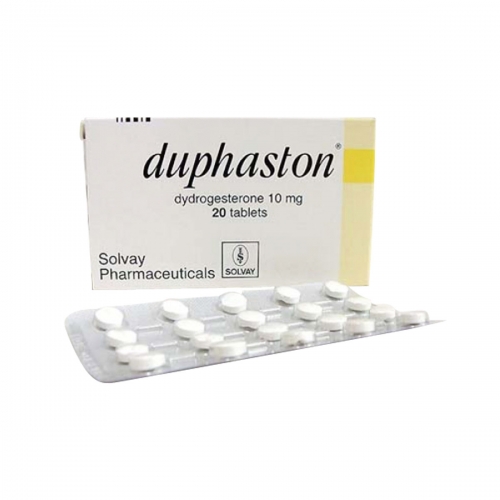 Duphaston
Pharmaceutical Form
A round, biconvex, scored, white coloured film-coated tablet, one side bearing the inscription , the other side bearing the inscription ‘155’ on either side of the break mark The score line is only to facilitate breaking for ease of swallowing and not to divide into equal doses.
Indications
Progesterone deficiencies
Treatment of progesterone deficiencies such as:
Treatment of dysmenorrhoea
Treatment of endometriosis
Treatment of secondary amenorrhoea
Treatment of irregular cycles
Treatment of dysfunctional uterine bleeding
Treatment of pre-menstrual syndrom
Treatment of threatened and habitual abortion, associated with proven progesterone deficiency
Treatment of infertility due to luteal insufficiency
Dosage and administration
Dysmenorrhoea : 10 mg twice daily from day 5 to day 25 of the cycle.
Endometriosis : 10 mg two or three times daily from day 5 to day 25 of the cycle or continuously.
Dysfunctional bleeding : 10 mg twice daily for five to seven days. (to arrest bleeding)
Dysfunctional bleeding : 10 mg twice daily from day 11 to day 25 of the (to prevent bleeding) cycle.
Amenorrhoea : an oestrogen once daily from day 1 to day 25 of the cycle, together with 10 mg dydrogesterone twice daily from day 11 to day 25 of the cycle.
Pre-menstrual syndrome : 10 mg twice daily from day 11 to day 25 of the cycle.
Irregular cycles : 10 mg twice daily from day 11 to day 25 of the cycle.
Threatened abortion : 40 mg at once, then 10 mg every eight hours until symptoms remit.
Habitual abortion : 10 mg twice daily until the twentieth week of pregnancy.
Infertility due to luteal : 10 mg daily from day 14 to 25 of the cycle.
Insufficiency : Treatment should be maintained for at least six consecutive cycles. It is advisable to continue treatment for the first few months of pregnancy as described under ‘Habitual abortion’.
Duphaston is not recommended for use in children below age 18 due to insufficient data on safety and efficacy.
Contraindications
Hypersensitivity to the active substance or to any of the excipients.
Known or suspected progestogen dependent neoplasms. Undiagnosed vaginal bleeding
Special warnings and precautions for use
Before initiating treatment with dydrogesterone for abnormal bleeding, the etiology for the bleeding should be clarified.
Treatment with dydrogesterone has infrequently been associated with alterations in liver function, sometimes accompanied by clinical symptoms. Thus, dydrogesterone should be used with caution in patients with acute liver disease or a history of liver disease as long as liver function tests have failed to return to normal. In cases of severe hepatic impairment treatment should be discontinued.
Breakthrough bleeding may occur in a few patients.
Conditions which need supervision
If any of the following conditions are present, have occurred previously, and/or have been aggravated during pregnancy or previous hormone treatment, the patient should be closely supervised. It should be taken into account that these conditions may recur or be aggravated during treatment with Trademark, in particular:
Porphyria
Depression
Other conditions
Patients with rare hereditary problems of galactose intolerance, the Lapp lactase deficiency or glucose-galactose malabsorption should not take this medicine.
Interaction with other medicinal products and other forms of interaction
No interaction studies have been performed.
Pregnancy and lactation
It is estimated that altogether roughly 35 million women have been treated with dydrogesterone. Although the number of pregnancies is difficult to estimate, as an approximation it can be assumed that in utero foetuses were exposed to dydrogesterone in around 9 million pregnancies1. From spontaneous surveillance systems to date, there is no evidence that dydrogesterone can not be used during pregnancy.
No other relevant epidemiological data on dydrogesterone are available.
However, a recent US case-control study investigating 502 cases with hypospadias and 1286 healthy controls suggested at least a 2-fold increased risk of second/third degree
hypospadias among boys born by mothers who took progestogens (predominantly progesterone) shortly prior or during early pregnancy (OR 2.2, 95% CI 1.0-5.0). The
causality is unclear as the indication for progesterone in pregnancy may be potential risk factors for hypospadias. For dydrogesterone, the risk of hypospadias is unknown.
Animal studies have been conducted, however, are insufficient with respect to pregnancy, embryonal /fetal, or postnatal development due to major difference in metabolism between rats and humans (for details see section “preclinical safety data”. The potential risk for humans is unknown.
Limited animal safety data suggest that dydrogesterone has delaying effects on partuition, which is consistent with its progestogenic activity.
Dydrogesterone is excreted in the milk of nursing mothers. A risk to the suckling child cannot be excluded. Dydrogesterone should not be used during breast-feeding.
There is no evidence that dydrogesterone decreases fertility at therapeutic dose.
Effects on ability to drive and use machines
Dydrogesterone has no or negligible influence on the ability to drive and use machines.
1 This high exposure in pregnancy is due to the fact that dydrogesterone has pregnancy related indications in
large parts of the world.
Undesirable effects
The undesirable effects reported in clinical trials and/or in post marketing experience following dydrogesterone therapy are:
MedDRA Common Uncommon Rare Very rare
system organ >1/100, <1/10 >1/1,000, >1/10,000, <1/10,000 incl.
class <1/100 <1/1,000 isolated reports
Blood and thelymphatic system disorders Haemolyticanaemia
Immune system disorders Hypersensitivity
Nervous system disorders Migraines/ headache
Hepatobiliary disorders hepatic function abnormal (withjaundice, asthenia ormalaise, and abdominal pain)
Skin and subcutaneous tissue disorders Dermatitis allergic (e.g. rash, pruritus,urticaria) Angioedema
Reproductive system and breast disorders Metrorrhagia Breast pain/ tenderness
General disorders and administrationsite conditions Oedema
Other adverse reactions obtained from the market with unknown frequency in association with dydrogesterone treatment:
Neoplasms benign, malignant and unspecified (incl. cysts and polyps)
Increase in size of progestogen dependent neoplasms (e.g.meningioma) (see section 4.3).
Psychiatric disorders Depressed mood
Reproductive system and breast disorders Breast swelling
Overdose
Limited data are available with regard to overdose in humans. Dydrogesterone was well
tolerated after oral dosing (maximum daily dose taken to date in humans 360 mg). No reports of ill-effects from overdose have been recorded. If a large overdose is discovered within two or three hours and treatment seems desirable, gastric lavage is recommended. There are no specific antidotes and treatment should be symptomatic. Aforementioned information is also applicable for overdosing in children.
Pharmacological properties
Pharmacodynamic properties
Pharmacotherapeutic group: Genito Urinary system and sex hormones, ATC code: G03DB01
Dydrogesterone is an orally-active progestogen which produces a complete secretory endometrium in an oestrogen-primed uterus thereby providing protection for estrogen induced increased risk for endometrium hyperplasia and/or carcinogenesis. It is indicated in all cases of endogenous progesterone deficiency. Dydrogesterone has no estrogenic, no androgenic, no thermogenic, no anabolic and no corticoid activity.
Pharmacokinetic properties
After oral administration of labeled dydrogesterone on average 63% of the dose is excreted into the urine. Within 72 hours excretion is complete. Dydrogesterone is completely metabolized. The main metabolite of dydrogesterone is 20α- dihydrodydrogesterone (DHD) and is present in the urine predominantly as the glucuronic acid conjugate. A common feature of all metabolites characterized is the retention of the 4,6diene-3-one configuration of the parent compound and the absence of 17α-hydroxylation. This explains the lack of estrogenic and androgenic effects of dydrogesterone.
After oral administration of dydrogesterone, plasma concentrations of DHD are substantially higher as compared to the parent drug. The AUC and Cmax ratios of DHD to dydrogesterone are in the order of 40 and 25, respectively.
Dydrogesterone is rapidly absorbed. The Tmax values of dydrogesterone and DHD vary between 0.5 and 2.5 hours.
Mean terminal half lives of dydrogesterone and DHD vary between 5 to 7 and 14 to 17 hours, respectively.
Dydrogesterone is not excreted in urine as pregnanediol, like progesterone. Analysis of endogenous progesterone production based on pregnanediol excretion therefore remains possible.
Preclinical safety data
Receptor binding studies and functional activity studies revealed antiandrogenic potency of progesterone, dydrogesterone and its metabolite dihydrodydrogesterone (DHD). The
antiandrogenic potency of dydrogesterone and its metabolite DHD is probably noticeably
weaker than that of progesterone. With regard to antiandrogenic effects mediated by inhibition of 5α-reductase type II, an important enzyme for differentiation of the male
external genitalia, progesterone is as potent as the synthetic enzyme inhibitor finasteride, whereas dydrogesterone and DHD are inactive.
The overall potential to act as antiandrogenic endocrine disruptors may be rated as highest for Progesterone, lower for Dydrogesterone and lowest for DHD.
Embryofoetal developmental studies were conducted in rats and rabbits using high dosages of dydrogesterone. No structural adverse effects were recorded in the foetal offspring. In a subsequent peripostnatal developmental study pregnant rats were treated with similar dosages of dydrogesterone during the period of gestation, and pups were raised. There were occasions of hypospadias in the male offspring but only at the highest dose. The next lower dose of dydrogesterone showed a sufficient safety margin in rat plasma exposure (>80 fold) compared to the estimated exposure at the maximum human daily dose of 60 mg. However, due to major species differences in metabolism between rats and humans, no adequate margin of exposure could be determined for the main human metabolite dihydrodydrogesterone.
Limited animal safety data suggest that dydrogesterone has delaying effects on parturition, which is consistent with its progestogenic activity.
Dydrogesterone has been used in several animal models and has been proven to be an entity with low toxicity, not having mutagenic or carcinogenic properties.
Pharmaceutical particulars
List of excipients
Lactose monohydrate, methylhydroxypropylcellulose, maize starch, colloidal anhydrous silica, magnesium stearate, Opadry Y-1-7000 white
Incompatibilities
None known
Shelf-life
5 years.
Special precautions for storage
Do not store above 30˚C. Keep in a dry place.
Keep the blister in the outer carton, in order to protect from moisture.
Nature and contents of container
– Blister strips of aluminium foil and PVC film, coated with PVDC of 20 tablets
Special precautions for disposal
Any unused product or waste material should be disposed of in accordance with local requirements.
এই পাতাটি ১১৬৭ বার দেখা হয়েছে