ঔষধের বিস্তারিত বা বিকল্প ঔষধ জানতে ঔষধের নাম দিয়ে সার্চ দিন। যেমন- Napa বা Alatrol বা Amodis
Cardilock 50mg
TabletAtenolol
Alco Pharma
Other Strength:
Alternative:
- TENOLOC 50mg
- Tenoren 50mg
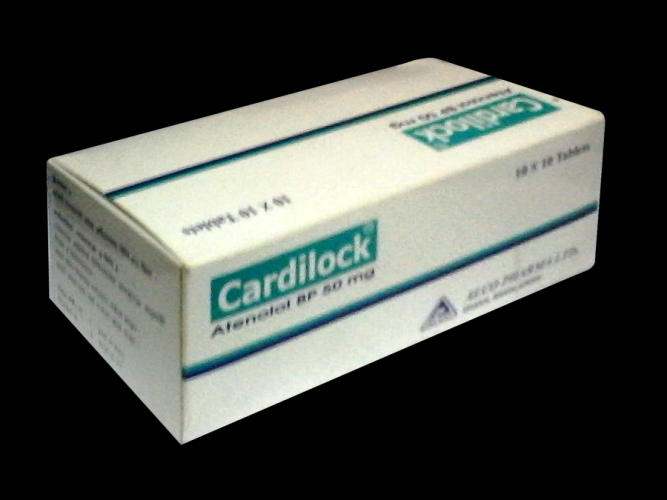
Cardilock
Description:
Cardilock (Atenolol) is in a group of drugs called beta-blockers. Beta-blockers affect the heart and circulation (blood flow through arteries and veins). Atenolol is used to treat angina and hypertension. It is also used to treat or prevent heart attack.
Composition:
Cardilock Tablet: Each tablet contains Atenolol BP 50 mg.
Pharmacology:
Cardilock (Atenolol) is beta1-selective (cardioselective) beta-adrenergic receptor blocking agent without stabilizing or intrinsic sympathomimetic (partial agonist) activities. This preferential effect is not absolute, however, at higher doses, Cardilock inhibits beta2-adrenoceptors chiefly located in the bronchial and vascular musculature.
Cardilock works by competiting for receptor site on cardiac muscle. This slows down the strength of hearts contractions and reduces its oxygen requirements and the volume of blood it has to pump. Hypertension may be treated with this drug because of its ability to increase the diameter of the blood vessels thus allowing blood to flow under less pressure.
Indication/Use:
Cardilock is indicated for the management of –
Hypertension
Angina pectoris
Cardiac arrhythmia
Myocardial infarction
Dosage Guideline:
Hypertension: Most patients respond to 50-100 mg daily given as a single dose. The effect will be fully established after 1-2 weeks. A further reduction in blood pressure may be achieved by co-administration of cardilock with a diuretic.
Angina: Most patients with angina pectoris will respond to 100 mg daily given as a single or divided dose.
Arrhythmia: Atenolol in low dose, 25-50 mg once daily, can be used. A suitable oral maintenance dose is 50-100 mg daily.
Side Effects:
Pronounced fatigue and cold extremities have been observed in 10 to 20% of the treated subjects. Complaints about bradycardia, dizziness and gastrointestinal symptoms are less frequent. Despite its relative selectivity Cardilock can cause bronchospasms in asthma patients. Amongst the many but rarely observed side effects are sleep disturbances, depressions, paresthesia, impotence, exanthema, psoriasis exacerbations and arthropathies.
Contraindication:
Cardilock is contraindicated in sinus bradycardia, heart block greater than first degree, cardiogenic shock and over cardiac failure.
Drug Interaction:
Verapamil: Both atenolol and verapamil depress myocardial contractility and the combination may precipitate heart failure in patients with impaired left ventricular function. It is recommended that neither drug be administered intravenously within 24 hours of discontinuing the other. Class 1 antiarrhythmic drug (e.g. disopyramide): These drugs also depress myocardial contractility and may precipitate cardiac failure when given in combination with atenolol. Clonidine : The simultaneous withdrawal of atenolol and clonidine may result in severe rebound hypertension. Indomethacin: Concurrent administration of indomethacin reduces the antihypertensive action.
Use in Pregnancy & Lactation:
Pregnancy: Pregnancy category D. Atenolol can cause foetal harm when administered to a pregnant woman. Atenolol crosses the placental barrier and appears in cord blood. Administration of Atenolol, starting in the second trimester of pregnancy, has been associated with the birth of infants that are small for gestational age. No studies have been performed on the use of Atenolol in the first trimester, and the possibility of fetal injury cannot be excluded. If this drug is used during pregnancy, or if the patient becomes pregnant while taking this drug, the patient should be apprised of the potential hazard to the foetus.
Lactation: Atenolol is excreted in human breast milk. Caution should be exercised when Atenolol is administered to a nursing woman.
Over Dose:
The predominant symptoms reported following atenolol overdose are lethargy, disorder of respiratory drive, wheezing, sinus pause and bradycardia. Additionally, common effects associated with overdosage of any beta-adrenergic blocking agent and which might also be expected in atenolol overdose are congestive heart failure, hypotension, bronchospasm and/or hypoglycemia.
Treatment of overdose should be directed to the removal of any unabsorbed drug by induced emesis, gastric lavage, or administration of activated charcoal.
Precaution:
Cardilock should not be given to patients with bronchospasm or asthma or to those with a history of obstructive airways disease. It should not be given to patients with congestive heart failure unless their heart failure is controlled and even then great care is still necessary. Abrupt withdrawal of beta blockers has sometimes resulted in angina, myocardial infarction, ventricular arrhythmias and death. Dosage will need to be reduced in patients with renal or hepatic dysfunction.
Therapeutic Class:
Antihypertensive
Dosage Form:
Tablet
Storage:
Store in a cool, dry place & away from light. Keep medicines out of reach of children.
এই পাতাটি ৩৬৫ বার দেখা হয়েছে