ঔষধের বিস্তারিত বা বিকল্প ঔষধ জানতে ঔষধের নাম দিয়ে সার্চ দিন। যেমন- Napa বা Alatrol বা Amodis
Axofen 180mg
Tablet
Fexofenadine Hydrochloride Aristo pharma
Other Strength:
- Axofen 120mg
Alternative:
- Fexo® 180mg
- Vifas 180mg
- Fexoral 180mg
- Ritch 180mg
- Fexotab 180mg
- Afexa 180mg
- Rynofex 180mg
- Alagra 180mg
- Xofedin 180mg
- Fexon 180mg
- X-Din 180mg
- Alanil 180mg
- Fenadin 180mg
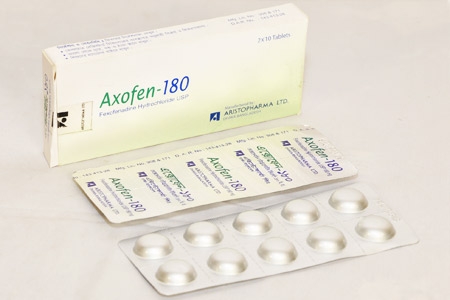 Axofen
Presentation:
Axofen-120 Tablet: Each film coated tablet contains Fexofenadine Hydrochloride USP 120 mg.
Axofen-180 Tablet: Each film coated tablet contains Fexofenadine Hydrochloride USP 180 mg.
Axofen Oral Suspension : Each 5 ml suspension contains Fexofenadine Hydrochloride USP 30 mg.
Indications:
Seasonal Allergic Rhinitis: Fexofenadine is indicated for the relief of symptoms associated with seasonal allergic rhinitis in adults and children of 2 years of age and older. Symptoms treated effectively are sneezing, rhinorrhea, itchy nose/palate/ throat, itchy/watery/red eyes.
Chronic Idiopathic Urticaria: Fexofenadine is indicated for the treatment of uncomplicated skin manifestations of chronic idiopathic urticaria in adults and children of 6 months of age and older. It significantly reduces pruritis and the number of wheals.
Dosage & Administration:
Indications Patient Group Dosage & Administration
Seasonal Allergic Rhinitis & Chronic Idiopathic Urticaria Adults and Children 12 Years and Older 60 mg twice daily or 120 mg or 180 mg once daily
Children 2 to 11 years 30 mg or 1 tea-spoonful twice daily
Chronic Idiopathic Urticaria Children 6 months to 2 years 15 mg or 1/2 tea-spoonful twice daily
Contrainidications:
Axofen is contraindicated in patients with known hypersensitivity to Fexofenadine or any of the ingredients of this preparation.
Side effects:
Adverse effects observed with Fexofenadine are almost similar to that observed with placebo. Adverse effects that may be observed are headache, dyspepsia, fatigue, drowsiness, nausea, chest tightness, dyspnoea etc.
Drug interaction:
Co-administration of Fexofenadine Hydrochloride with either ketoconazole or erythromycin may cause increased plasma concentration of Fexofenadine. Antacid containing Aluminium and Magnesium may reduce the absorption of Fexofenadine. Fruit juices such as grapefruit, orange and apple may reduce the bioavailability of Fexofenadine.
Use in special groups:
Use in pregnancy: There are no adequate and well controlled studies in pregnant women. Fexofenadine Hydrochloride should be used during pregnancy only if the potential benefit justifies the potential risk to the fetus.
Use in nursing mothers: It is not known if Fexofenadine is excreted in human milk. Therefore, caution should be exercised when Fexofenadine Hydrochloride is administered to a nursing woman.
এই পাতাটি ৪২৯ বার দেখা হয়েছে