Search by medicine name. Napa OR Alatrol OR Amodis
Amuran 150mg
TabletRanitidine
Amulet Pharmaceuticals
Other Strength:
Alternative:
- RANIDIN 150mg
- Neofast-S 150mg
- Rhine 150mg
- Ranitack 150mg
- Xantid 150mg
- Ranid 150mg
- Veridin 150mg
- Rani 150mg
- Astac 150mg
- Bentid 150mg
- Norma-H 150mg
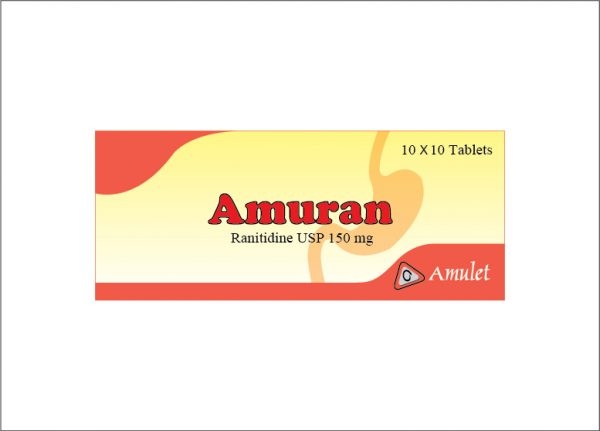
Amuran
COMPOSITION:
AMURAN 150 mg Tablet: Each film coated tablet contains Ranitidine 150 mg as Ranitidine Hydrochloride USP.
PHARMACOLOGY:
AMURAN is the brand name of Ranitidine. It is a histamine H2-receptor antagonist. As a result of its H2-receptor blocking action Amuran promotes rapid and effective ulcer healing with sustained pain relief, both day and night by reduction of gastric acid output. After oral administration Ranitidine is rapidly absorbed from the GI tract. Ranitidine is widely distributed throughout the body and is 10-19% protein bound. Ranitidine is metabolised in the liver and excreted principally in urine. Ranitidine competitively inhibits the interaction of histamine with H2 receptors, thus ranitidine inhibits gastric acid secretion elicited by histamine, other H2 agonists and gastrin. About 50% of ranitidine is bioavailable after oral dosing and there is a significant presystemic metabolism. Food has a minimal effect on absorption. Plasma half-life of ranitidine is 2 to 3 hours. Excretion of ranitidine and its metabolites occur largely through kidney.
HOW SUPPLIED:
AMURAN 150 Tablet: Box containing 10×10’s tablets in Alu-Alu blister pack.
INDICATION:
Peptic ulcer (Duodenal ulcer, Gastric ulcer), Reflux esophagitis, Zollinger-Ellison syndrome, post operative ulcer and other conditions where reduction of gastric secretion and acid output is desirable, such as, the prophylaxis of gastrointestinal haemorrhage from stress ulceration in seriously ill patients, the prophylaxis of recurrent haemorrhage in patients with bleeding peptic ulcers and before general anaesthesia in patients considered to be at risk of acid aspiration (Mendelson’s syndrome), particularly obstetric patients during labour.
DOSAGE AND ADMINISTRATION:
Peptic ulcer: 150 mg twice daily with breakfast and at night for 4 weeks.
Maintenance therapy: 150 mg at night.
Reflux esophagitis: 150 mg twice daily at night for upto 8 weeks.
Zollinger- Ellison Syndrome: 150 mg 3 times daily and this may be increased if necessary to 6 g daily in divided dose.
SIDE-EFFECTS:
Adverse effects of ranitidine are generally infrequent and minor and rash may occur. Mental confusion and hallucination have occurred in geriatric patients during ranitidine therapy.
CONTRAINDICATIONS:
Hypersensitivity to H2 blocker, acute intermittent porphyria, rapid intravenous administration owing to rare occurrences of cardiac disease.
PRECAUTION:
It should be used with caution in patients with impaired renal function, hepatic dysfunction, pregnancy, lactating mothers and suspected malignancy.
USE IN PREGNANCY AND LACTATION:
Pregnancy: Ranitidine crosses the placenta. But there is no evidence of impaired fertility or harm to the foetus due to Ranitidine. Like other drugs, Ranitidine should only be used during pregnancy if considered essential.
Lactation: Ranitidine is excreted in human breast milk. Caution should be exercised when the drug is administered to a nursing mother.
OVERDOSAGE:
No specific features of overdose have been reported and oral overdose of 18 gm has been reported to be safe.
STORAGE:
Store in a cool and dry place, protected from light.
HOW SUPPLIED:
AMURAN 150 Tablet: Box containing 10×10’s tablets in Alu-Alu blister pack.
এই পাতাটি ৪৪৩ বার দেখা হয়েছে