ঔষধের বিস্তারিত বা বিকল্প ঔষধ জানতে ঔষধের নাম দিয়ে সার্চ দিন। যেমন- Napa বা Alatrol বা Amodis
Adglim 1mg
Tablet
Glimepiride Unimed Unihealth MFG. Ltd
Other Strength:
- Adglim 2mg
Alternative:
- DACTUS 1mg
- Secrin 1mg
- Limaryl 1mg
- Glimirid 1mg
- Gipid 1mg
- Gluconor 1mg
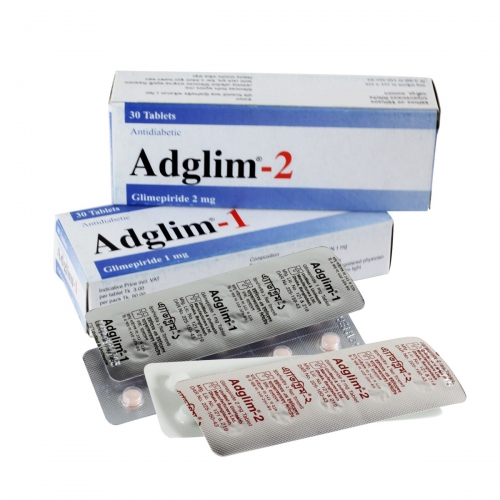 Adglim
Presentation
Adglim-1 tablet: Orange, circular convex shaped tablet; each tablet contains Glimepiride INN 1 mg. Adglim-2 tablet: Green, circular convex shaped tablet; each tablet contains Glimepiride INN 2 mg.
Indications
Glimepiride is indicated as an adjunct to diet and exercise to lower the blood glucose in patients with non-insulin-dependent (Type II) diabetes mellitus (NIDDM) whose hyperglycemia cannot be controlled by diet and exercise alone. Glimepiride may be used concomitantly with metformin when diet, exercise, and glimepiride or metformin alone do not result in adequate glycemic control. Glimepiride is also indicated for use in combination with insulin to lower blood glucose in patients whose hyperglycemia cannot be controlled by diet and exercise in conjunction with an oral hypoglycemic agent.
Dosage and administration
There is no fixed dosage regimen for the management of diabetes mellitus with glimepiride or any other hypoglycemic agent. Usual starting dose: The usual starting dose of glimepiride as initial therapy is 1 mg (one Adglim-1 tablet) to 2 mg (one Adglim-2 tablets) once daily, administered with breakfast or the first main meal. Those patients who may be more sensitive to hypoglycemic drugs should be started at 1 mg (one Adglim-1 tablet) once daily, and should be titrated carefully. The maximum starting dose of glimepiride should be not more than 2 mg (one Adglim-2 tablet). Usual maintenance dose: The usual maintenance dose is 1 mg (one Adglim-1 tablet) to 4 mg (two Adglim-2 tablets) once daily. The maximum recommended dose is 8 mg (four Adglim-2 tablets) once daily. After reaching a dose of 2 mg (one Adglim-2 tablet) dosage increases should be made in increments of not more than 2 mg (one Adglim-2 tablet) at 1-2 week intervals based upon the patient’s blood glucose response. Glimepiride-Insulin combination therapy: The recommended glimepiride dose is 8 mg (four Adglim-2 tablets) once daily administered with the first main meal.
Contra-indications, warnings, etc.
Contra-indications: Glimepiride is contra-indicated in patients with known hypersensitivity to the drug, diabetic ketoacidosis, with or without coma.
Precautions: All sulfonylurea drugs are capable of producing severe hypoglycemia. Proper patient selection, dosage, and instructions are important to avoid hypoglycemic episodes. Patients with impaired renal function may be more sensitive to the glucose-lowering effect of glimepiride. A starting dose of 1 mg once daily followed by appropriate dose titration is recommended in those patients. Combined use of glimepiride with insulin or metformin may increase the potential for hypoglycemia.
Drug interactions: The hypoglycemic action of sulfonylureas may be potentiated by certain drugs, including nonsteroidal anti-inflammatory drugs and other drugs that are highly protein bound, such as salicylates, sulfonamides, chloramphenicol, coumarins, probenecid, monoamine oxidase inhibitors, and beta adrenergic blocking agents. When these drugs are administered to a patient receiving glimepiride, the patient should be observed closely for hypoglycemia. When these drugs are withdrawn from a patient receiving glimepiride, the patient should be observed closely for loss of glycemic control. Certain drugs tend to produce hyperglycemia and may lead to loss of control. These drugs include the thiazides and other diuretics, corticosteroids, phenothiazines, thyroid products, estrogens, oral contraceptives, phenytoin, nicotinic acid, sympathomimetics, and isoniazid. When these drugs are administered to a patient receiving glimepiride, the patient should be closely observed for loss of control. Coadministration of aspirin (1 g tid) and glimepiride led to a 34% decrease in the mean glimepiride AUC and, therefore, a 34% increase in the mean CL/f. The mean Cmax had a decrease of 4%. Blood glucose and serum C-peptide concentrations were unaffected and no hypoglycemic symptoms were reported. Pooled data from clinical trials showed no evidence of clinically significant adverse interactions with uncontrolled concurrent administration of aspirin and other salicylates. Coadministration of either cimetidine (800 mg once daily) or ranitidine (150 mg bid) with a single 4-mg oral dose of glimepiride did not significantly alter the absorption and disposition of glimepiride, and no differences were seen in hypoglycemic symptomatology. Pooled data from clinical trials showed no evidence of clinically significant adverse interactions with uncontrolled concurrent administration of H2 receptor antagonists. Concomitant administration of propranolol (40 mg tid) and glimepiride significantly increased Cmax, AUC, and T1/2, of glimepiride
by 23%, 22%, and 15%, respectively, and it decreased CL/f by 18%. The recovery of M1 and M2 from urine, however, did not change. The pharmacodynamic responses to glimepiride were nearly identical in normal subjects receiving propranolol and placebo. Pooled data from clinical trials in patients with NIDDM showed no evidence of clinically significant adverse interactions with uncontrolled concurrent administration of beta-blockers. However, if beta-blockers are used, caution should be exercised and patients should be warned about the potential for hypoglycemia. The responses of serum glucose, insulin, C-peptide, and plasma glucagon to 2 mg glimepiride were unaffected by coadministration of ramipiril (an ACE inhibitor) 5 mg once daily in normal subjects. No hypoglycemic symptoms were reported. Pooled data from clinical trials in patients with NIDDM showed no evidence of clinically significant adverse interactions with uncontrolled concurrent administration of ACE inhibitors. A potential interaction between oral miconazole and oral hypoglycemic agents leading to severe hypoglycemia has been reported. Whether this interaction also occurs with the intravenous, topical, or vaginal preparations of miconazole is not known. Potential interactions of glimepiride with other drugs metabolized by cytochrome P450 II C9 also include phenytoin, diclofenac, ibuprofen, naproxen, and mefenamic acid. Although no specific interaction studies were performed, pooled data from clinical trials showed no evidence of clinically significant adverse interactions with uncontrolled concurrent administration of calciumchannel blockers, estrogens, fibrates, NSAIDs, HMG-CoA reductase inhibitors, sulfonamides, or thyroid hormone. Use in pregnancy and lactation: Glimepiride should not be used during pregnancy and lactation.
Pediatric use: Safety and effectiveness in pediatric patients have not been established.
Geriatric use: No overall differences in safety or effectiveness were observed between elderly and adult subjects, but greater sensitivity of some older individuals cannot be ruled out. The drug is known to be substantially excreted by the kidney, and the risk of toxic reactions to this drug may be greater in patients with impaired renal function. Because elderly patients are more likely to have decreased renal function, care should be taken in dose selection, and it may be useful to monitor renal function.
Use in renal insufficiency: A starting dose of 1 mg glimepiride may be given to NIDDM patients with kidney disease, and the dose may be titrated based on fasting blood glucose levels. Use in hepatic insufficiency: No studies were performed in patients with hepatic insufficiency. Adverse reactions: Hypoglycemia. Adverse events, other than hypoglycemia, are dizzines, asthenia, headache, and nausea.
Gastrointestinal reactions: Vomiting, gastrointestinal pain, and diarrhoea Dermatologic reactions: Allergic skin reactions, e.g., Pruritus, erythema, urticaria, and morbilliform or maculopapular eruptions. These may be transient and may disappear despite continued use of glimepiride. Hematologic reactions: Leukopenia, agranulocytosis, thrombocytopenia, hemolytic anemia, aplastic anemia, and pancytopenia have been reported with sulfonylureas. Metabolic reactions: Hepatic prophyria reactions and disulfiram-like reactions have been reported with sulfonylureas; however, no cases have yet been reported with glimepiride.
Overdosage: Overdosage of sulfonylureas, including glimepiride, can produce hypoglycemia. Mild hypoglycemic symptoms without loss of consciousness or neurologic findings should be treated aggressively with oral glucose and adjustments in drug dosage and/or meal patterns. Close monitoring should continue untill the physician is assured that the patient is out of danger. Severe hypoglycemic reactions with coma, seizure, or other neurological impairment occur infrequently, but constitute medical emergencies requiring immediate hospitalization. If hypoglycemic coma is diagnosed or suspected, the patient should be given a rapid intravenous injection of concentrated (50%) glucose solution. This should be followed by a continuous infusion of a more dilute (10%) glucose solution at a rate that will maintain the blood glucose at a level above 100 mg/dl. Patients should be closely monitored for a minimum of 24 to 48 hours, because hypoglycemia may recur after apparent clinical recovery.
Pharmaceutical precautions
Store in a cool and dry place, protected from light.
Packaging quantities
Adglim-1 tablet: Carton containing 30 tablets in blister.
Adglim-2 tablet: Carton containing 30 tablets in blister.
এই পাতাটি ৪৭৬ বার দেখা হয়েছে