Besiflox 5 ml 0.6%
Eye/Ear DropBesifloxacin
Aristo pharma
Other Strength:
Alternative:
- Besiven 0.6%
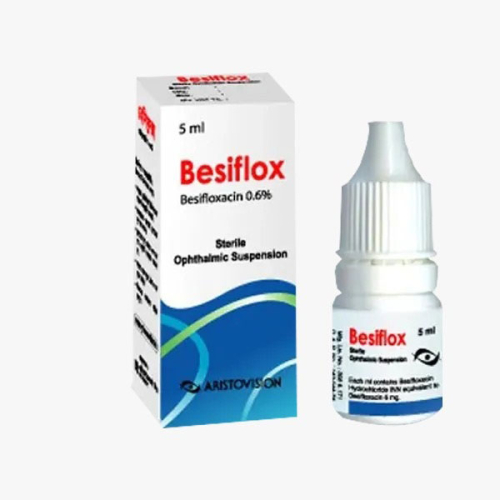
Besiflox 5 ml
Indications of Besiflox 5 ml Ophthalmic Solution
Besifloxacin ophthalmic suspension is indicated for the treatment of bacterial conjunctivitis caused by susceptible isolates of the following bacteria:
Corynebacterium pseudodiphtheriticum
Corynebacterium striatum
Haemophilus influenzae
Moraxella lacunata
Staphylococcus aureus
Staphylococcus epidermidis
Staphylococcus hominis
Staphylococcus lugdunensis
Pharmacology of Besiflox 5 ml Ophthalmic Solution
Because it inhibits both bacterial DNA gyrase and topoisomerase IV, besifloxacin is effective against Gram positive and Gram negative bacteria. DNA gyrase is a necessary enzyme for bacterial DNA replication, transcription, and repair. Topoisomerase IV is a necessary enzyme for chromosomal DNA partitioning during bacterial cell division.
Dosage & Administration of Besiflox 5 ml Ophthalmic Solution
Adults and children (1 year of age and older): Instill one drop in the affected eye(s) 3 times a day for 7 days.
Pediatric Use: The safety and effectiveness of Besifloxacin in infants below one year of age have not been established.
Contraindications
Hypersensitivity to the active ingredient or any component of this formulation.
Side Effects of Besiflox 5 ml Ophthalmic Solution
Conjunctival redness was the most commonly reported ocular adverse event, occurring in about 2% of patients. Other side effects documented in Besifloxacin patients were blurred vision, eye pain, eye irritation, eye pruritus, and headache, which occurred in about 1-2 percent of patients.
Pregnancy & Lactation
Pregnancy Classification C. In pregnant women, no sufficient and well-controlled research have been established. Only if the possible benefit outweighs the risk to the fetus should this medicine be used during pregnancy.
Lactation: Whether or not Besifloxacin is secreted in human milk is unknown. When administering Besifloxacin to a nursing mother, extreme caution is advised.
Precautions & Warnings
This medication is only intended for topical ophthalmic use and should not be injected subconjunctivally or directly into the anterior chamber of the eye. Prolonged use of anti-infectives, like other antibiotics, can lead to the proliferation of non-susceptible organisms, such as fungus. If superinfection arises, stop using it and seek alternate treatment. To avoid contamination, do not touch the dropper's tip to the afflicted eye, eyelid, or any other surface. Patients should avoid using contact lenses while taking this medication. Before using, give it a good shake.
Therapeutic Class
Ophthalmic antibacterial drugs
Storage Conditions
Store below 30°C at a cool and dry place, away from light. Keep out of reach of children.
এই পাতাটি ১৭ বার দেখা হয়েছে